
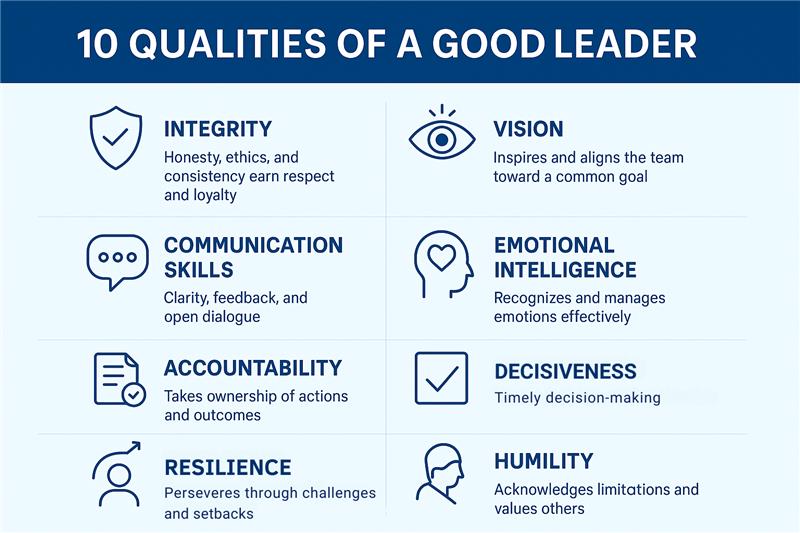
Effective leadership is the backbone of any successful organization. Understanding and embodying the leadership qualities that make a great leader can set you apart in today’s competitive environment. Here’s a guide to the top leadership skills and key leadership characteristics that every aspiring leader should develop.
1. Integrity
Integrity is the foundation of trust. Leaders who act honestly, ethically, and consistently earn the respect and loyalty of their teams. It’s not just about following rules—it’s about making the right decisions, even when they’re tough. Teams respect leaders who are fair, transparent, and accountable, which in turn strengthens the organization’s culture.
2. Vision
A great leader is one with a clear vision set for their team toward a common goal. Visionary leaders forecast the challenges, find opportunities, and prioritize implementation. Executing their strategies while keeping everyone well-informed motivates and aligns the organization, where everyone understands their specific role in accomplishing this greater sensation.
3. Communication Skills
Communication, they say, is talking, but listening, understanding, and connecting with others is communicating. Leaders who communicate well can clarify their goals, give helpful feedback, and maintain an open dialogue atmosphere. This creates trust, decreases friction, and allows team members to feel that they have been heard and valued in the work environment.
4. Emotional Intelligence
Emotional intelligence makes a leader capable of recognizing and managing emotions within themselves and comprehending those in others. Genuine leaders with high EQ remain calm during conflicts, build trust, and motivate members to perform. Understanding the needs and feelings of teams enhances collaboration between members while promoting a positive and inclusive work environment.
5. Adaptability
Change is a constant. Therefore, any good leader must have this quality of adaptation. Leaders who are adaptable embrace new situations, think outside the box, and make changes to their strategies if ever the need arises. They walk teams confidently and flexibly through uncertainty, encouraging innovation and problem-solving.
6. Decisiveness
A leader is often judged on their timely decision-making. Being decisive means evaluating the situation, contemplating the options, and taking a course of action. Decisive leaders engender confidence, sustain momentum, and own outcomes, thus encouraging the team to follow their lead.
7. Accountability
Accountable leaders take ownership of their actions and hold their teams to high standards. By being transparent about successes and setbacks, they foster a culture of responsibility and reliability. This encourages team members to perform at their best, knowing that challenges and achievements are shared collectively.
8. Empowerment
Empowering leadership essentially means providing a team with tools, support, and autonomy to be able to do their job. They empower the team to be creative, take initiative, or get truly engaged. Empowered employees feel trusted and appreciated; consequently, this leads to increased productivity and levels of innovation while leaders are left to focus on top priorities.
9. Resilience
Setbacks are part of any leadership journey. Resilient leaders persevere through challenges, remaining focused while keeping the teams motivated. They ask questions from their mistakes and always look for the positive side, hence inspiring others to be confident. Resilience is what keeps one powering through the hardest of times and emerging stronger as a unit.
10. Humility
Humility allows leaders to acknowledge their limitations, heed the feedback, and appreciate greatness in others. It enables leaders to encourage collaboration, inclusiveness, and respect. They present themselves as approachable and open-minded, thus forging great relationships with team members, clients, and stakeholders.
For those who want to develop leadership skills, HCIL has programs that promote the traits for success. The organization helps build core leadership skills so that people can survive in contemporary workplaces and foster team performance.
| Fun Fact:
Companies with strong leadership practices are 13 times more likely to outperform competitors financially. Investing in leadership development not only improves personal growth but also contributes to organizational success. |
By developing these best leadership qualities, leaders will be able to inspire teams, generate ideas, and develop a vital and productive workplace. These leadership qualities, when incorporated in the workplace, can work wonders for individual careers as well as organizational culture.